



Self-driving Waymo taxis will start operating on freeways with customers onboard

 1 week ago
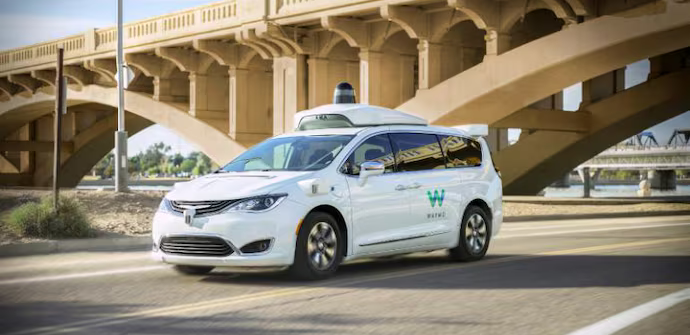
SAN BRUNO, Calif. — Waymo announced Wednesday that it will begin offering robotaxi trips on freeways in Los Angeles, Phoenix, and the San Francisco Bay Area — a major milestone for the autonomous driving industry.
Until now, the company’s driverless rides have been limited to city streets. Waymo said it waited to ensure the safety of its technology before allowing vehicles to operate at the higher speeds found on freeways. After extensive testing, the company now believes it is ready for the next step.
Travel on highways and expressways has long been one of the major challenges for autonomous vehicles, joining obstacles like harsh weather conditions and intentional interference.
“This moment has been years in the making,” Waymo co-CEO Dmitri Dolgov told reporters.
“Freeways are simple to learn, but extremely difficult to master when the goal is full autonomy without a human backup — and at scale. We needed time to do it the right way,” he added.
According to Waymo spokesperson Sandy Karp, the company appears to be the first in the U.S. to provide fully driverless freeway rides — with no safety operator in the vehicle — to paying customers.
Cornell University researcher Wendy Ju noted that while freeways have fewer variables like pedestrians, their higher speeds introduce much higher risk. Autonomous cars must be able to detect potential dangers far ahead to react in time, she said. Ju expressed “cautious optimism” regarding Waymo’s progress.
During a 40-minute test ride with an NBC News reporter last week, a Waymo vehicle smoothly navigated Northern California freeways — merging, following speed limits, maintaining safe distances, and handling heavy traffic. It even avoided a human driver attempting an illegal lane change at an exit.
Competition in the robotaxi space is intensifying. Tesla recently began offering rides in Austin and the Bay Area using a prototype of its upcoming autonomous system, though human employees remain inside the cars. Zoox, an Amazon-owned company, operates a rider-only service in Las Vegas. Several Chinese companies are rapidly developing large-scale robotaxi programs as well.
Waymo’s expansion into freeway driving coincides with its broader growth strategy. The company plans to more than double the number of cities it serves, including colder locations like Denver and Detroit. Waymo also announced curbside pickup at San Jose International Airport — its second major airport after Phoenix. New vehicles, including the Zeekr RT van, will soon join its fleet, and Waymo is collaborating with Toyota to explore self-driving technology for personal vehicles.
Like Uber or Lyft, robotaxi services let users book rides through an app, but the vehicles are controlled entirely by software. Waymo cars use cameras and lidar sensors to operate without human drivers.
However, safety remains a concern. GM’s Cruise lost its California permits in 2023 after a pedestrian was dragged by one of its cars. Waymo vehicles have faced their own incidents, including vandalism and the recent death of a cat in San Francisco.
Even so, Waymo reports no human fatalities and says its autonomous vehicles have now driven over 100 million miles without a safety driver.
Texas A&M professor Srikanth Saripalli, an expert in autonomous systems, said Waymo’s safety record is strong but noted that the company has so far operated mostly in favorable climates. Proving its reliability in snowy or more complex environments remains a challenge.
Freeways account for roughly 18% of all U.S. traffic deaths, federal data shows. Waymo said it has studied dangerous scenarios such as aggressive drivers, construction zones, hydroplaning, and high-speed collisions. Employees and guests have been testing freeway rides for the past year. The rollout will occur gradually while the company monitors performance.
Waymo also emphasized that its vehicles obey posted speed limits, even if surrounding drivers do not.
“On a 65-mph freeway, that’s the top speed our vehicles will use unless a rare situation requires otherwise,” said product manager Jacopo Sannazzaro.
Freeway capability is crucial in cities like Los Angeles and Phoenix, where avoiding highways usually results in longer travel times.
As for concerns that autonomous taxis may worsen traffic congestion, Waymo disputes the idea.
“We have not observed any increase in freeway congestion in our service areas,” said Waymo product manager Pablo Abad.

शरद जोशी एक डिजिटल क्षेत्र के अनुभवी पत्रकार हैं, जिनकी राजनीति की गतिशीलता पर गहरी नजर है और वैश्विक और घरेलू राजनीति की जटिलताओं को उजागर करने का जुनून है। शरद जोशी ने गहन विश्लेषण, जटिल राजनीतिक कथाओं को सम्मोहक कहानियों में बदलने की प्रतिष्ठा बनाई है। राजनीति के अलावा...
View Profile
Reader Response
0 Comments
Top News




No comments yet. Be the first to comment!