



September Sees Strong Job Growth at 119,000, But Labor Market Shows Signs of Softening

 1 week ago
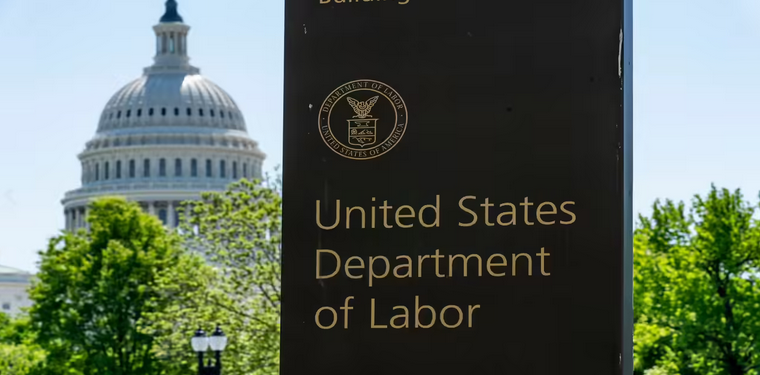
The highly anticipated employment report — initially slated for Oct. 3 — was delayed because of the government shutdown.
In September, the U.S. economy added 119,000 jobs, surpassing expectations and signaling that hiring was still relatively strong before the shutdown disrupted federal data releases.
However, a closer look at the Bureau of Labor Statistics data reveals a more complicated picture. Despite solid headline job growth, the labor market has recently shown signs of strain, highlighted by a wave of layoff announcements from major corporations.
Most of September’s gains came from health care, restaurants and bars, and social assistance roles. Meanwhile, manufacturing continued its decline with 6,000 jobs lost, challenging one of the Trump administration’s key economic priorities. Transportation and warehousing also saw a substantial drop, losing 25,300 positions.
The unemployment rate ticked up from 4.3% to 4.4%, partly because the labor force grew by 450,000 people, according to the BLS. Wage growth also slowed during the month.
Because of the government shutdown, Thursday’s report was postponed from its original Oct. 3 release date. Updated October employment numbers will be included in the full November report on Dec. 16, the BLS confirmed.
The lack of federal economic data over the past six weeks has made assessing the labor market increasingly difficult. But private-sector indicators suggest growing pressure on households, cooling spending, and persistent inflation.
In recent weeks, companies such as Amazon, IBM, Microsoft, Target, Paramount, General Motors, and UPS have all announced large-scale layoffs. Verizon joined them Thursday, revealing internal plans to cut 13,000 jobs.
According to Cleveland Fed data, around 39,000 workers received layoff notices in October — a figure not seen since May, and before that only during times of significant economic distress.
Another report from Challenger, Gray & Christmas counted 153,000 job cuts announced in October, though analysts caution that its methodology can vary.
Despite differing totals, one troubling indicator is clear: Job seekers are now unemployed for an average of 24.5 weeks — nearly six months — the longest stretch since late 2017.
‘An unusual market’
Tiffany Price, South Florida general manager for Job News USA, said many businesses are tightening budgets and slowing hiring. Even firms that are still recruiting are offering lower pay than experienced workers expect.
Attendance at a recent Job News fair in Broward County remained around 2,000 job seekers, but employer participation was nearly half of what it was a year earlier.
Even so, many companies report difficulty finding skilled workers. Price said both employers and applicants increasingly rely on a “post and pray” approach, which results in poor matches. More successful outcomes come from local networking and in-person outreach, she noted.
One bright spot has been hiring in local government — consistent with national trends showing steady growth in municipal jobs since the post-pandemic recovery began.
“It’s a strange market,” Price said.
The Fed is watching closely
Concerns about the labor market have become central to the Federal Reserve’s debate over future interest rate cuts. On Monday, Fed Governor Christopher Waller argued that a December rate cut is necessary to prevent further deterioration.
“My focus is on the labor market,” he said, noting that recent data has only reinforced his view that additional easing may be needed.
Fed Chair Jerome Powell struck a more cautious tone last month, acknowledging a gradual slowdown but stopping short of guaranteeing another cut.
Meeting minutes released Wednesday revealed deep divisions among policymakers. Many warned that lowering rates further could re-ignite inflation by making borrowing too easy for businesses and consumers.
“Most participants noted that…further cuts could increase the risk of inflation becoming more persistent,” the minutes said.
Still, some economists say conditions have not yet reached crisis levels. State unemployment claims remain relatively low, and ADP reported a modest rebound in hiring.
“Fears of a renewed labor market downturn…are not reflected in muted jobless claims or the pick-up in private hiring,” wrote Thomas Ryan of Capital Economics.

शरद जोशी एक डिजिटल क्षेत्र के अनुभवी पत्रकार हैं, जिनकी राजनीति की गतिशीलता पर गहरी नजर है और वैश्विक और घरेलू राजनीति की जटिलताओं को उजागर करने का जुनून है। शरद जोशी ने गहन विश्लेषण, जटिल राजनीतिक कथाओं को सम्मोहक कहानियों में बदलने की प्रतिष्ठा बनाई है। राजनीति के अलावा...
View Profile
Reader Response
0 Comments
Top News








No comments yet. Be the first to comment!